🔮 Which Faction should you join when our Kickstarter goes live?
Take the Quiz
When we began this project, I thought building a world for our game to inhabit would be the hardest part of my role. What I learned was that building a world, while challenging, wasn’t the hardest part at all. The hardest part was making sure that the world I was building was the same as the one that actually ended up in the game. That’s because I wasn’t building it alone – I was building it with dozens of other writers, artists, and collaborators who were venturing into the unknown setting of Ardua right alongside me.
When a world exists entirely within your head, it’s easy to keep things straight. There’s one vision, one answer. But when it comes time to let others into that world, things start to get messier. There are competing views, new ideas, and diverging points of view. Keeping everyone (artists, contributors, designers, etc) in agreement about simple questions like, “What does a Kynda look like?” or “What does a Disciple wear?” becomes a challenge.
Our earliest briefs were basically just short prompts. “Man wearing fantasy style clothing, holding a sword, attacking the POV.” “Monster flying through the jungle; make sure it has insect-like wings”. This worked well enough when there was little other work to compare it to, but once we started getting back more and more art pieces, we realized that they weren’t as connected, visually, as we would like.
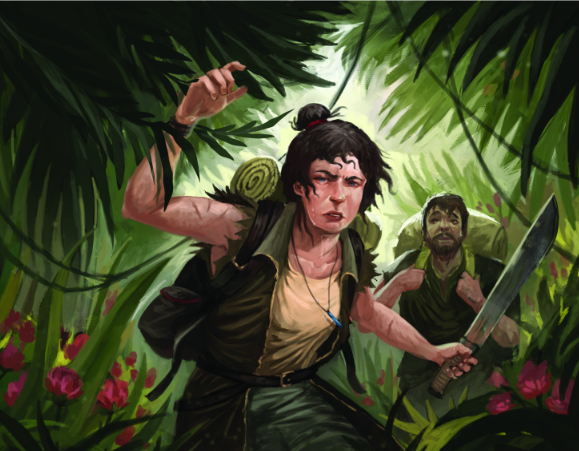
Clothing, for instance, became a huge concern. If we say “fantasy style clothing”, that means something very different to one artist than it might to another. If we don’t say anything at all about the clothing, we may end up with one character who looks too modern while another looks too archaic. It wasn’t enough to have a strong central vision – I had to make sure that vision was accessible and understandable to everyone we brought in to complete work for us. For that, I had to start building not just a world but a framework for working within it.
We started with concept art. For each part of the setting that we would have people working in, we wanted to have something visual to show them so that we were all starting from the same “square one”. Working with concept artists, Collin and I sat down and talked through our ideas about what this thing we were building was. What does fantasy-style clothing mean to us? When we say jungle, what do we actually mean by that? Prior to this, I didn’t realize just how many different kinds of jungle you might actually get, without any further specification (it’s at least five, but maybe more. No one seems to agree on this. It’s an entire thing).
Editor note from Collin: I never thought I’d be researching 17th century sailor outfits from around the world in order to make sure our sailors were dressed appropriately.
Once we started getting not just card art, but concept art, the world began to fall into sync a bit easier. It gave our artists something to refer back to rather than just using the written art briefs to visualize our world. It allowed us to set visual guidelines for what our world and its inhabitants looked like and it served as a great entry point for understanding the visual language of our setting. Especially for some of the more fantastical elements, like the Kynda, it was important that we have something concrete to point to about their biology and appearance. Some of the earliest concept art we commissioned was just body poses for these strange plant people, because we knew that given free reign our artists would provide (a really cool, but really confusing) array of designs.
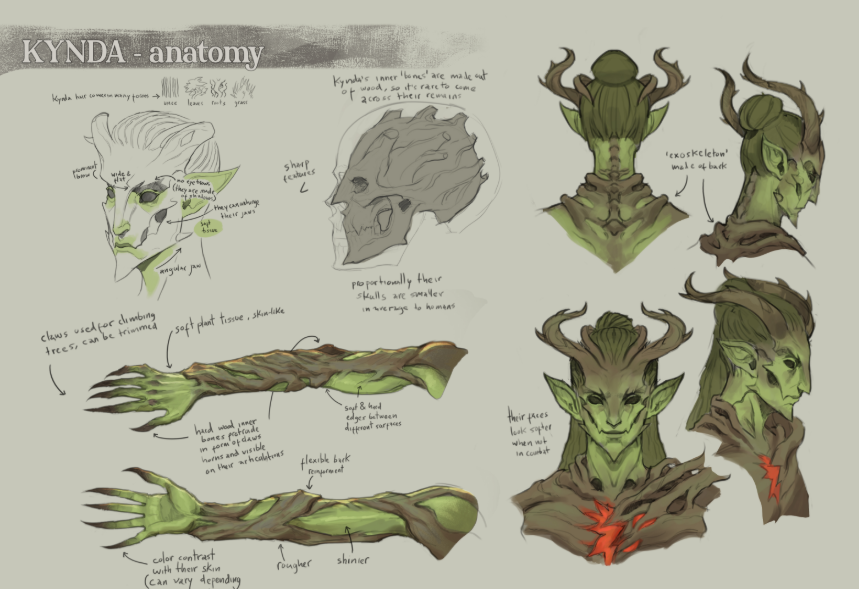
Once we had concept art in hand, the next step was documenting as much as possible of what already existed within this world. Setting documents, faction histories, and art guidelines had to work together to make sure that every artist or brief writer was working with the same information and the same context so that our final product looked as cohesive as possible. These cards should all inhabit the same shared world.
In some cases, different cards might even feature the same person and sometimes they might be in production simultaneously. That meant we couldn’t just show a completed image to a second artist and say “this is what that looks like”. Both artists had to have sufficient information to create something cohesive in tandem with one another. That meant setting them up for success from the start, with detailed briefs and reference images, concept art, and guidance.
Once we implemented it the entire thing came together. Previously, we’d been providing all of this information separately, ad hoc. When artists had questions, we’d send a document. When we hired them for a piece, we’d send them art guidelines. When I wrote a brief, I’d pull what we needed from various sources to create a bespoke document with the information that seemed necessary.
The final step was to cut out all of this rework and streamline our information into comprehensive, reusable templates, so that we could easily insert what we needed into a framework that already contained all of the relevant information an artist or writer would need to complete work and keep our world consistent. These brief templates became complete sources of truth for the project the artist was working on.
The most important thing I learned about maintaining the setting, however, was to let go a little. It’s meant to be a world, and worlds are meant to be lived in. They’re odd, idiosyncratic things. Too much uniformity, too much cohesion doesn’t build immersion. It hurts it. How many places do you know that are completely logical? That doesn't have elements that make you scratch your head and wonder how did that ever become a thing?
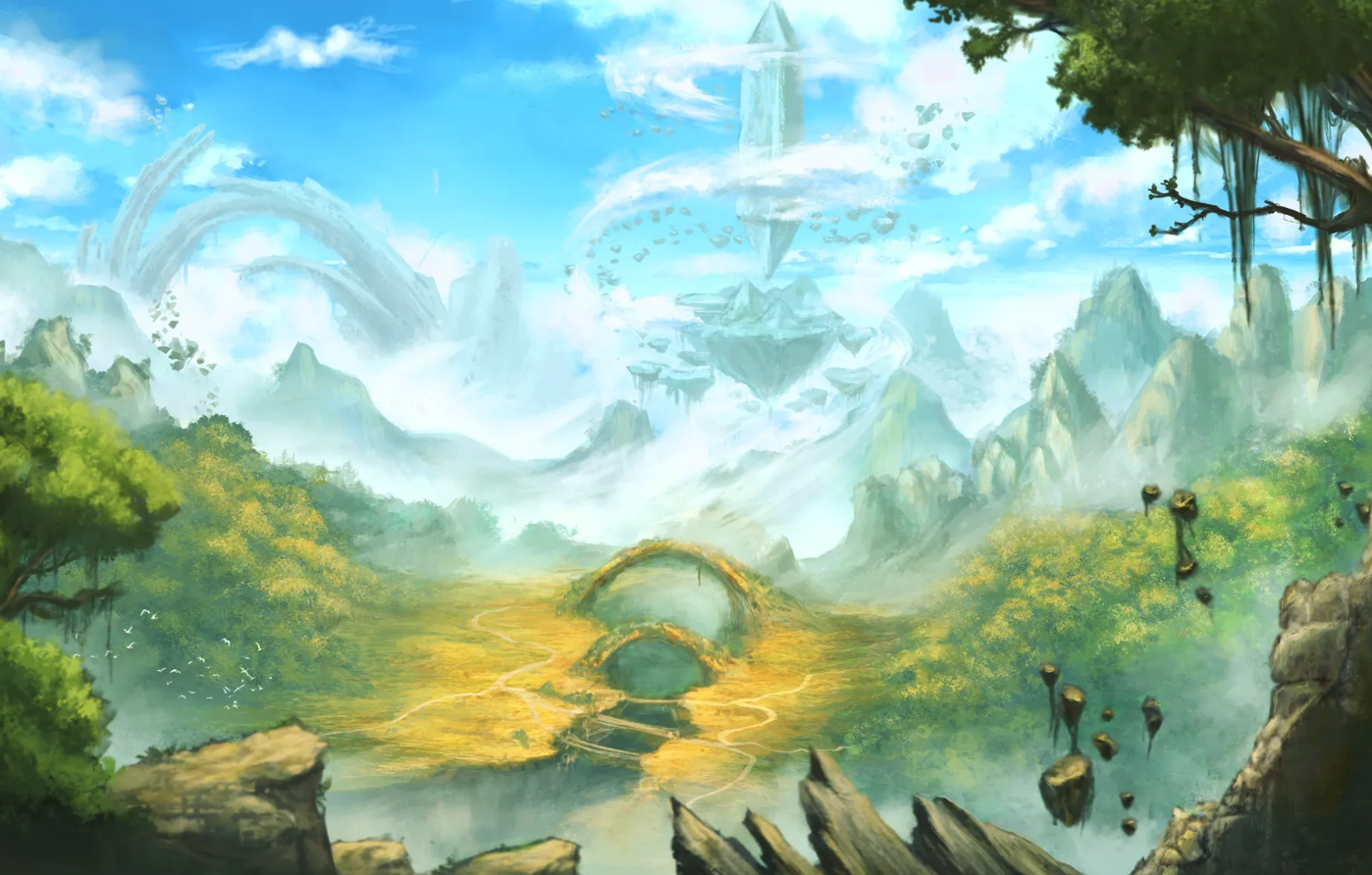
Luminous has worked now with almost three dozen artists, writers, and designers. At first, I thought this would be an obstacle to our project. How could we keep a single, coherent setting with so many people working on it? Once we had the framework we needed in place, though, I realized that it wasn’t an obstacle – it was a benefit. Just like our world, Ardua isn’t any one thing. Each contributor has brought their own spin to Ardua and left it a little stranger, a little more real. As long as we are all starting from the same place, the journey each one took through our weird jungle ruins left the overall world richer, more lived in, more alive.
Be the first to know about our Kickstarter launch and updates from the team.