

Last updated 4.2.2026
The content of this guide will change as we update and clarify the ruleset of the game. If you would like the latest print version of the rulebook, download it here.
Luminous is a fast-paced card game requiring savvy resource management and clever combat planning. Freeform turns allow for combat tricks and cat-and-mouse style back and forths to take center stage. This guide will teach you the basics for playing your first game and serves as a reference for keywords and battle concepts. We hope you enjoy playing the game as much as we enjoyed making it.
The Basics
A game of Luminous is played between two players. Each player has their own deck led by a powerful Favored. Your chosen Favored helps inform your deckbuilding strategy.
Win Conditions
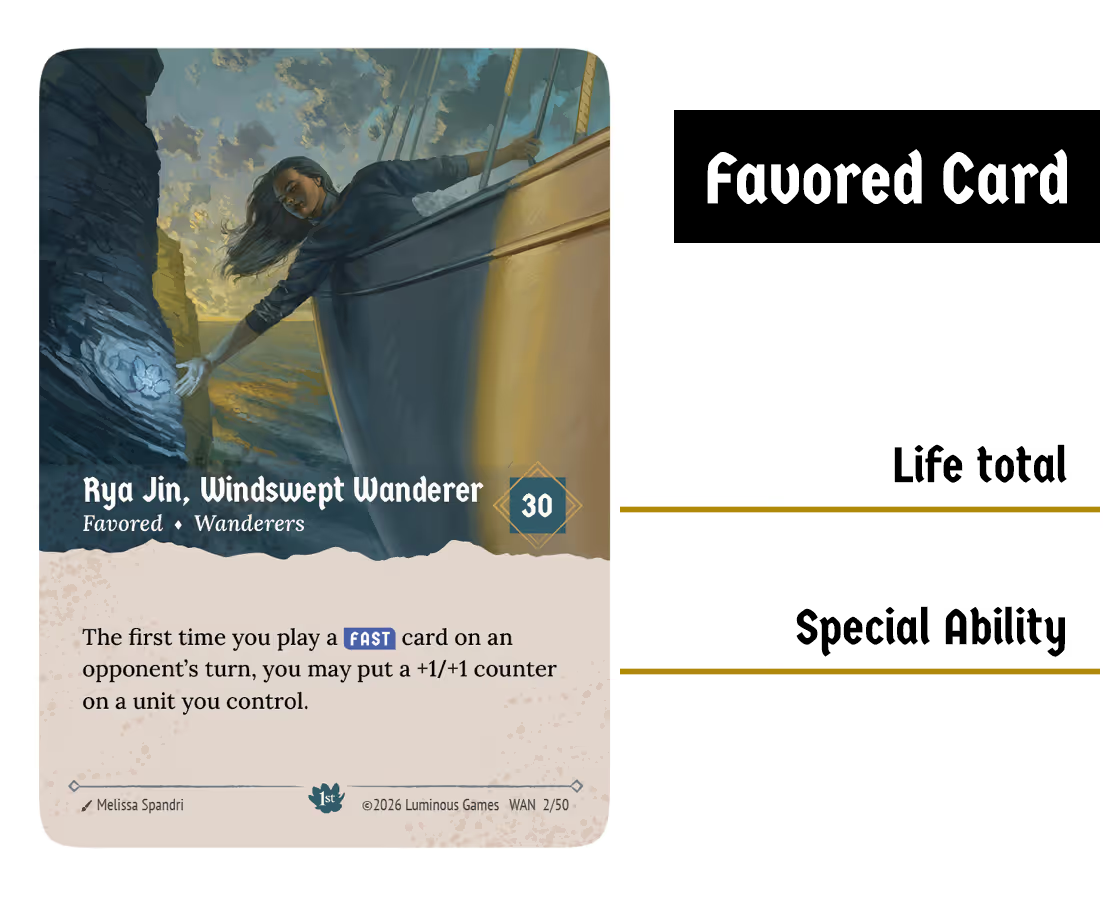
Each Favored starts with a specific life total that you can find on the right-hand side of the card. To win, you must reduce the opponent’s Favored to 0 life. Alternatively, if you are the second player to draw a card from your empty deck, you win.
Building your deck
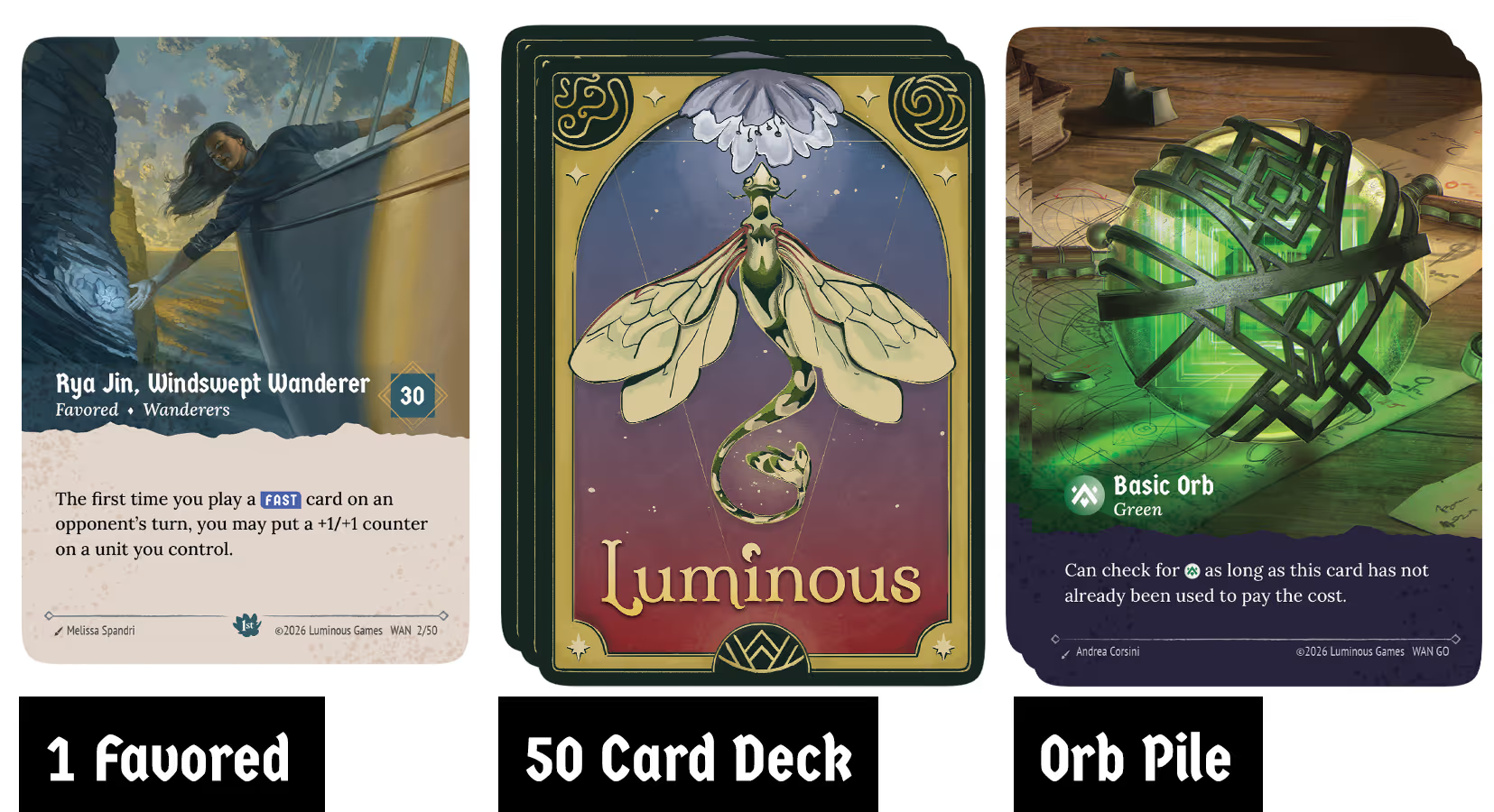
Each deck is led by a Favored. The main deck size is 50 cards, which can include 3 copies of any standard card and up to 2 unique cards. Each player also brings an orb supply. We suggest six of each color, but you can bring however few or many you need.
Card Types
Each card in Luminous has a type. Types define where a card starts when it enters play, how it can be played, and how it interacts with the play area.

Unit
Your main fighting force. When you play a unit, it is put into the play area. A unit is considered readying the turn it enters play, and cannot attack or expend for abilities. However, they can block while readying. Units die if they are dealt damage equal to or greater than their health in one turn, and they recover their health at the end of every turn.

Relic
Items with various helpful and harmful abilities. When you play a relic it is put into play. Like units, relics are considered readying the turn they enter play. Relics have a durability value, and when their durability reaches 0 they are destroyed. Unlike units, they do not recover durability at the end of the turn. Units may attack relics instead of the opposing Favored.

Spell
Spells are powerful incantations to turn the tide of battle. When you play a spell, it goes to the discard pile after resolving its ability text.

Unique
Unique cards are more powerful than standard cards. Because of this, players may only include a single copy of any one unique card in their deck. Additionally, a deck may only contain 2 total unique cards.
Fast
Fast is a modifier that adds the ability for the card to be played during combat and on your opponent’s turn as long as you have priority. Units, relics, and spells can all be fast.
Favored
The Favored you choose lets you and your opponent know what faction you’re playing and what cards you can play in your deck. Favored sit outside your deck, never leave play, and start the game in the play area.


Orb
The resource you will use to play your cards. Basic orbs exist separately from your deck in an area called the supply. Orbs that are not basic are included in your main deck instead of your supply. You choose whether to play a basic orb from the supply or a non-basic orb from your hand each turn. The orb pile is face-up, public information, and non-randomized. An orb is ready to expend the turn it is played. Orbs expend to create an essence of its color to pay for the cost of a card or ability. Expend orbs to create essence to pay the essence cost.
Token
Tokens, like orbs, begin the game in the supply and are created by the effects of other cards. Most card effects “play” the token, triggering any on-play effects. If a token would go into any area other than the play area, it is removed from the game instead.
Luminous Bloom
A special token that may be played after 6 basic orbs have been put into play. Once played, a Luminous Bloom remains until sacrificed for a Luminous Essence.
Play Area
Main Deck
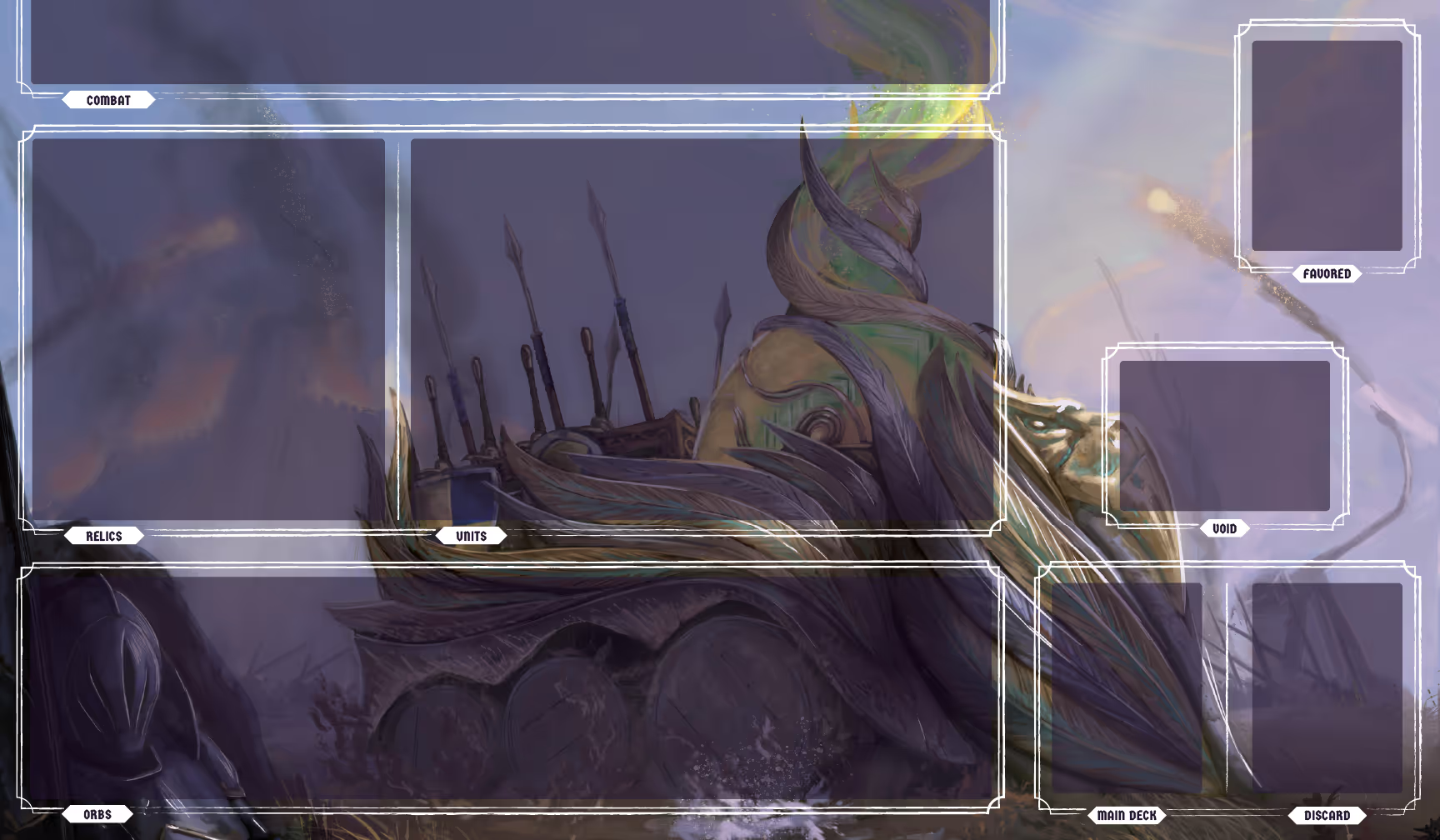
Your main deck is randomized and is placed face down. No player may look at the cards in a main deck unless a card tells them to do so.
Discard Pile
Your discard pile is face up, and all cards in it are public knowledge. Cards go to the discard pile when they are discarded, destroyed, or when a spell card finishes resolving its effects.
Void
The void is face up and public knowledge unless a card is sent there face down. A card that is “voided” will be added to its owner’s void.
Supply
All supplementary cards like orbs and tokens begin the game outside of play in the Supply. Orbs may be played through natural game actions, but most tokens can only be played if an effect allows them to do so.
Favored Zone
Your Favored zone is where your Favored is placed when play begins. Favored cannot leave play.
Relic Area
Place relics here when played. They’re protected behind your units.
Unit Area
Place units here when played. Units can be expended or readied here. Move units to the combat area whenever they attack or block.
Combat Area
When a unit enters combat, place it here expended to indicate that it has either attacked or blocked, then proceed to a combat phase.
Reading the Cards
Cost: Essence cost and orb checks
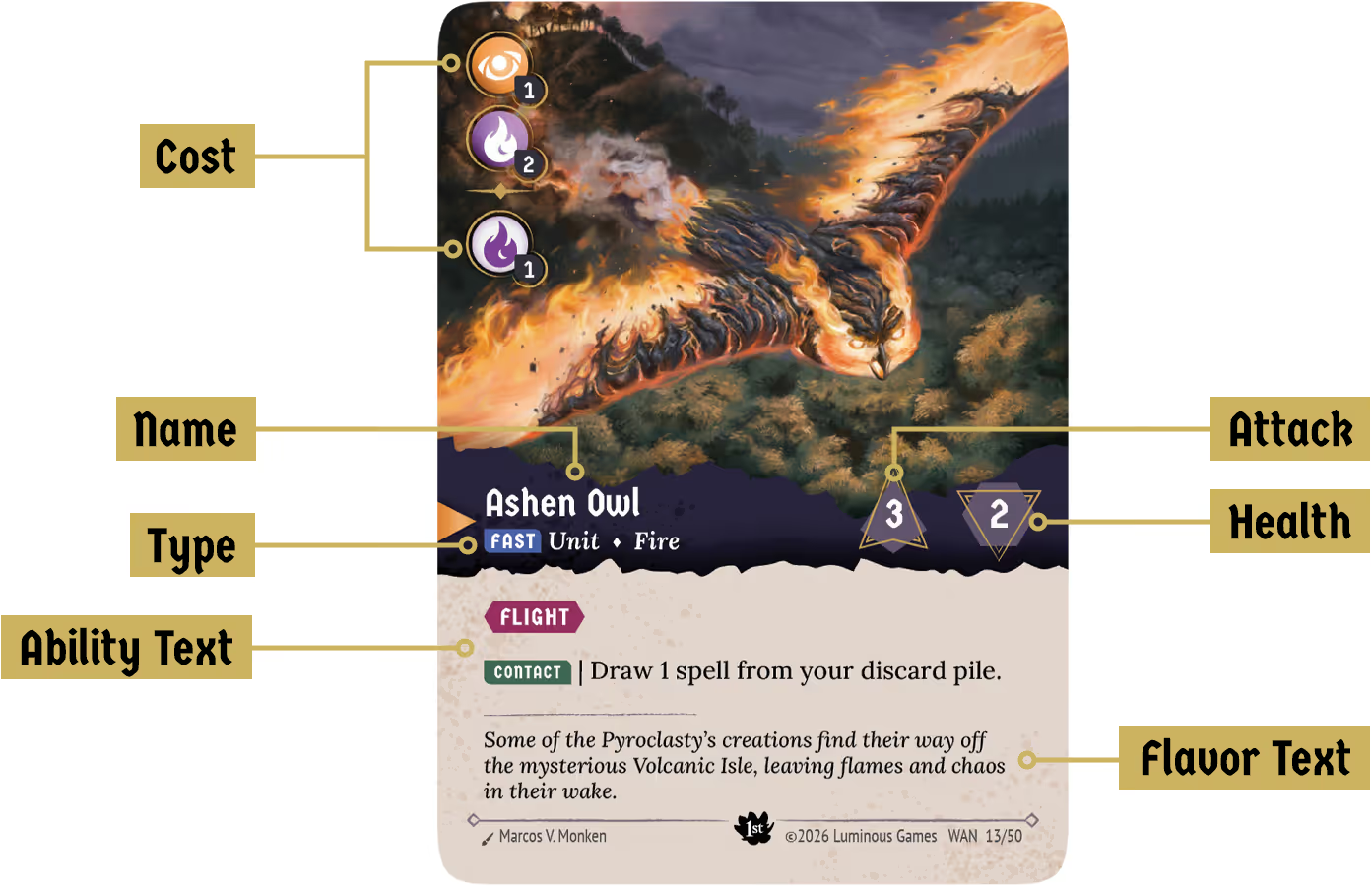
There are two parts of a card’s cost, the essence cost and the orb check. Expend orbs and/or sacrifice Luminous Bloom tokens to create the essence needed to pay for the essence cost. Then, if the card has an orb check, make sure that you have an orb in play of that color that was not used to pay the essence cost for this card. The orb check does not care if the orb is expended.
Name
The name of each card distinguishes it from other cards. You may only have 3 copies of each of standard cards in your deck.
Type
A card’s type defines its properties. See card types.
Attack
The attack stat of a unit defines how much damage it will deal in combat.
Health
The health of a unit defines how much damage it can take before it’s destroyed. When a unit reaches 0 health, move it to the discard pile. Damage is healed at the end of each turn.
Ability Text
The ability text defines what the card does and how it interacts with other cards. Some text involves keywords like Arrive. These words are stand-ins for the longer definition of the ability. You can find all the keywords in the Keyword Glossary.
Flavor Text
This has no relevance to how the card plays in the game. It exists to express the lore and immerse you in the world of Luminous.
Playing a Game
Setup
Shuffle your deck. Present the deck to your opponent for an opportunity to cut the deck.
Randomly decide who will be the starting player (by rolling a die, flipping a coin, or the last person who picked a flower). If you are playing more than one game in a match, the player who lost the last game chooses the starting player.
Both players draw four cards to form their opening hand.
Now each player may choose to mulligan. The starting player may put one card from their hand on the bottom of their deck. The other player may put two cards from their hand on the bottom of their deck. If a player puts any cards on the bottom of their deck this way, they draw back that many cards.
The starting player may begin their first turn.
The starting player does not draw a card during their first draw step.
Parts of a Turn
Turns by default consist of three phases: Start Phase, Main Phase, and End Phase. Players may frequently enter into an optional Combat Phase.

Start Phase
During the Start Phase, the active player completes these three steps in order:
Ready Step - Ready all cards you control
Effect Step - Any effects that happen at the start of turn happen now
Draw Step - Draw a card
Key Concept
Active Player
If it is your turn, you are considered the active player. If it is not your turn, you are considered the non-active player.
Key Concept
Ready
To ready a card, set it in portrait position. A ready card may now expend to attack or activate abilities this turn.
Main Phase
Once the Start Phase is over, the Main Phase begins and the active player is given priority.
Key Concept
Priority
Priority, or the ability to perform an action, is passed from one player to the next after each action is taken. A player may only take actions while they have priority. A player may choose to pass (take no action) any time they have priority.
When both players pass consecutively without performing an action the Main Phase ends and the End Phase begins.
During the Main Phase, the active player may take one of these actions:
- Play an orb (This doesn’t pass priority.)
- Play a card from their hand
- Activate the ability of a card they control
- Attack an opponent’s Favored or relic with a ready unit they control (This creates a Combat Phase. Only one unit may attack at a time.)
- Pass priority.
Priority is passed to the other player after an action is performed and abilities have resolved.
The non-active player may perform one of these actions while they have priority:
- Play a fast card from their hand
- Activate the ability of a card they control
- Pass priority

Playing an Orb
Once per turn while they have priority during their main phase, the active player may play an orb. Playing an orb does not pass priority.
When playing an orb, the active player chooses a basic orb from their supply or a nonbasic orb from their hand. They may only play one orb each turn. Once a player has 6 basic orbs in play, they may no longer play orbs from their supply. Their options become one of the following:
- Play a non-basic orb from their hand
- Play a Luminous Bloom token
- Pivot (return one ready basic orb they control to their supply to play a new orb from their supply)
Combat Phase
A Combat Phase is created each time the active player expends one of their units to attack an opposing Favored or relic. Any number of Combat Phases may exist, so long as the player has enough units to declare as attackers.

Attack Step
The active player has expended one of their units to attack the opposing Favored or a relic. We are now in the attack step. This is the step where players would resolve any effects triggered by a unit expending to attack. The most common example of this is the ability Wave. Once all triggers have resolved, move to the Block/effect step.

Block/effect step
Attacking was the action of the active player, so the first player to be given priority inside the combat phase is the defending player.
The actions the defending player may perform during combat are:
- Block with any number of units. Blocking expends the units
- Play a fast card
- Activate the ability of a card they control
- Pass priority (Passing without taking an action before you have blocked forfeits your ability to block in this combat phase. You may only block if you have not yet passed this combat.)
The actions the attacking player may perform during combat are:
- Play a fast card
- Activate the ability of a card they control
- Pass priority
When both players pass consecutively without performing an action, the block/effect step ends.

Combat damage step
Players are not given priority during the combat damage step. The combat damage step resolves one of two ways:
If the attack was blocked: The attacking unit deals damage equal to its attack distributed as the controller chooses to the blocking units. The blocking units deal damage equal to their attack to the attacking unit. Combat damage is dealt simultaneously. Units dealt lethal damage are destroyed and put into their owner’s discard pile.
If the attack was not blocked: The attacking unit deals damage equal to its attack to the opposing Favored or relic.
Any triggers from combat damage being dealt or units being destroyed now resolve. An example of this is a unit with Contact dealing damage to an opposing Favored. Once triggers have resolved, the Combat Phase ends, return to the Main Phase, and the active player is given priority.
End Phase
During the End Phase, the active player does these 3 steps in order. Priority is not given to either player during this phase. No actions may be taken during this phase.
Effect step - Effects that trigger at the end of turn happen
Discard step - The active player discards down to 6 cards in hand
Reset damage step - Damage on units is removed
Cleanup step - Effects that last until end of turn are removed
Playing a Card & Resolving Effects
To play a card, follow these steps:
Announce the card or ability
Announce that you are playing a card or activating or triggering an ability by saying its name and revealing it to all players.
Pay the cost
Expend orbs and/or sacrifice Luminous Bloom tokens to create the essence needed to pay for the essence cost. Then, if the card has an orb check, make sure that you have an orb in play of that color that was not used to pay the essence cost for this card. The orb check does not care if the orb is expended.
Resolve the card or ability
If it is a spell or activated ability, declare choices and perform the effect listed in the ability text. Spells go to the discard pile after performing their effects. If it is a unit or relic, put it into play.
Resolve any effects that were triggered from the card entering play, such as Arrive abilities.
Batches: resolving multiple triggered effects
Scenarios may come up in which multiple effects happen (or “trigger”) at the same time, creating a batch.
The active player (the person whose turn it is) resolves their triggers first in any order they choose.
- If resolving triggers creates new triggers, they resolve in the same batch.
- The choice of which trigger to resolve is made after the previous trigger finishes, so a player may choose either a new or old trigger to resolve next.
When all of the active player’s triggers have resolved, the non-active player may begin resolving their triggers. Repeat this process until there are no triggers in the batch to resolve.
Basically, to resolve a batch, the active player finishes all of their triggers in whatever order they want before the non-active player is allowed to begin doing the same until everything has been done.
Key Concepts
Cost
Effects may reference a card’s cost, in this case it is looking at the sum of the numbers attached to the symbols in both Essence Cost and Orb Check.
Draw
Moving a card from an area into your hand. If not otherwise specified, you would draw the card from your deck. Draw X means putting X cards from that zone into your hand, where X is a numerical value.
Discard
Moving a card from an area into your discard pile. If not otherwise specified, you would discard the card from your hand. Discard X means putting X cards from that zone into your discard pile, where X is a numerical value.
Destroy(ed)
A destroyed card is removed from play. Often moving the card to the discard pile. When a token is destroyed, it ceases to exist after being placed in the discard pile.
Expend(ed)
A card is expended by turning to the landscape position. An expended card cannot attack, block, or expend to activate abilities.
Ready
Orbs enter play ready. Units and relics are readying the turn they enter play, while they are still played in portrait position, they are not considered ready. A card is readied by turning it to the portrait position. A card that has been readied may attack or expend to activate abilities this turn. Even if a unit has already attacked this turn, readying it will allow it to attack again.
Sacrifice
To sacrifice something, the owner of the card must choose to destroy it. This may be required to pay a cost, like sacrificing a Luminous Bloom token.
Void
A voided card is moved from its current zone to the Void. Cards in the Void are inaccessible for the rest of the game.
Golden rule
If an effect would contradict these rules, obey the effect of the card.
Keyword Glossary
Battle Keywords
Dash
This card may expend to attack and activate abilities the turn it is played.
FLight
A unit with Flight may only be blocked by units with Flight or Watchful. A relic with Flight may only be attacked by units with Flight.
Lunge
In combat, the attacking unit with Lunge deals damage before units without Lunge. A unit dealt lethal damage this way is destroyed and does not deal damage in the normal damage step. Lunge has no effect while blocking.
Overwhelm
In combat, an attacking unit with Overwhelm that has been blocked may assign any beyond-lethal damage to the attack’s original target. A blocking unit with overwhelm does not deal excess damage back to the attacking unit’s favored.
Barrier
Opposing players must attack your relic with Barrier before they can attack your Favored or other relics you control without Barrier.
Watchful
This unit may block attacking units with Flight.
Trigger Keywords
Arrive
Triggers when the card enters play.
Depart
Triggers when the card is put into the discard pile from play.
Contact
Triggers when the unit deals combat damage to an opposing Favored (not relics). This effect resolves even if the unit died to combat damage.
Nth Wave
Triggers when the unit is declared as the Nth attacker of the turn. Example: Second Wave will trigger when the unit with Second Wave is the second unit to attack that turn.
Effect Keywords
Bolster X: Put X durability counters on a relic you control.
Pivot: Return one ready basic orb to your supply to play an orb from your supply.
Scout X: Look at X top card(s) of your deck. You may either keep those cards on top or move them to the Discard pile.
Suggested Starting Decks
The following decklists are provided to give you a place to start out of the box. Each of the three Favored-specific decks use the entire product. The 2-player using 1 box decks split the product in half to make the two decks. We highly encourage deckbuilding and experimenting with different decks!
2 players using 1 box
It’s possible for two players to use one set of The Wanderers to play, though the full experience is meant for both players to have access to every available card during deckbuilding. Follow these decklists to build two decks using all cards available in The Wanderers and play a game of Luminous with two people from one box.
Note: Both players will share orbs, tokens, and Luminous Blooms in this mode.
Deck 1
Favored
1x Rya Jin, Windswept Wanderer
Uniques
1x Kamarua's Gospel
1x Velna, Exiled Magebreaker
Units
3x Trail Guide
3x Diving Dragonspawn
3x Wilderroad Sentry
3x Delcan Operative
3x Undercity Expropriator
3x Jeddos's Junk Brigade
3x Ashen Owl
3x Rya's Horizon Guard
Spells
3x Walk Back
3x Take Flight
3x Expand the Mind
3x Sudden Death
3x Wander the Stacks
3x Cataclysmic Echo
Relics
3x Essence Refractor
3x Ancient's Eye
Deck 2
Favored
1x Silgar Apex Predator
Uniques
1x Standard of Glass
1x Quinn, Crown Prince
Units
3x Hive Queen
3x Silgar's Elite
3x Scar City General
3x Chartered Expeditioner
3x Kynda Infiltrator
3x Freelance Delver
3x Ancient's Servant
3x Vinehorn Stag
3x Toll Collectors
3x Xanthe Raider
3x Hedge Tinker
3x Field Recruiter
Spells
3x Strengthen the Mind
3x Hired Research
Relics
3x Mobile Armory
3x Kinetic Harness
Jeddos, Brother of the Road Decklist
Relics are the name of the game for those using Jeddos as their Favored. Build up your repository of relics, use them to augment the strength and abilities of your units, and beat your enemy through technological superiority. Players who like a slower, more controlling pace might enjoy starting here.


Favored
1x Jeddos, Brother of the Road
Uniques
1x The Lodestar
1x Breaker’s Chains
Units
3x Trail Guide
3x Hedge Tinker
3x Undercity Expropriator
3x Disciple Apostate
3x Diving Dragonspawn
3x Ancient’s Servant
3x Jeddos’s Junk Brigade
Spells
3x Walk Back
3x Order the Mind
3x Cataclysmic Echo
Relics
3x Unstable Salvage
3x Glass Garden
3x Ancient’s Eye
3x Vortex Cannister
3x High Command
3x Reliquary Tome
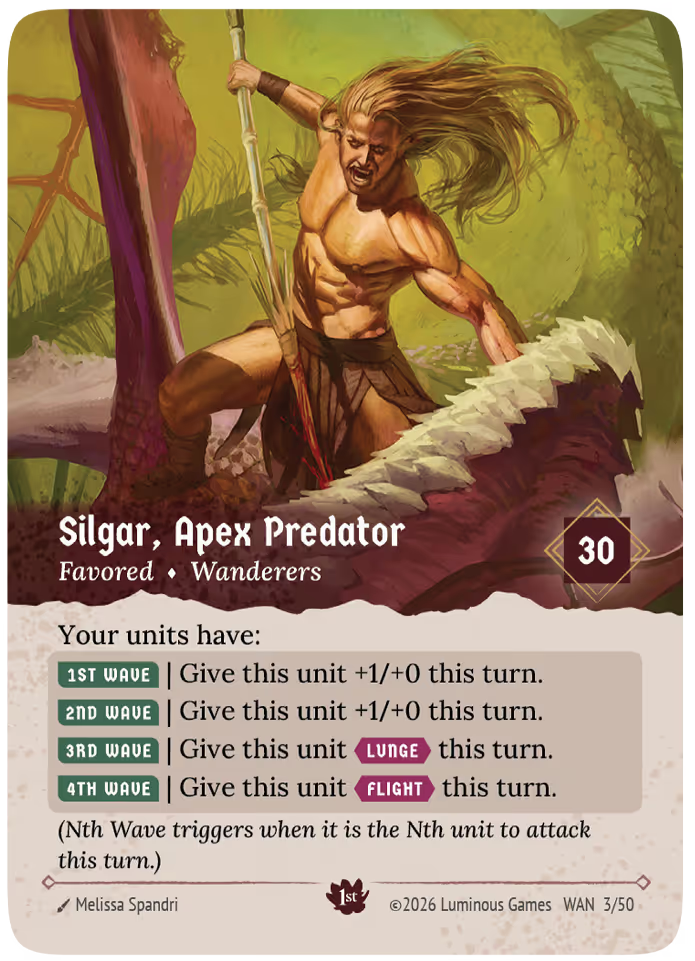
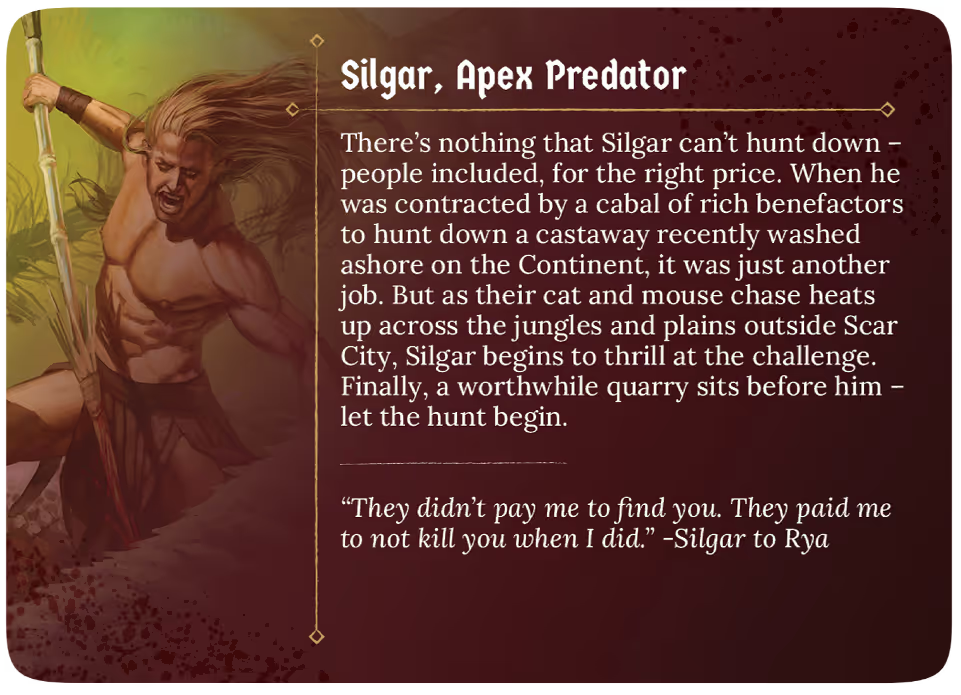
Silgar, Apex Predator Decklist
Silgar’s battle skill focused Favored ability makes him an ideal choice for players who want to go wide, deploy their forces, and overwhelm their opponent with brute strength.
Favored
1x Silgar, Apex Predator
Uniques
1x Quinn, Crown Prince
1x Standard of Glass
Units
3x Hedge Tinker
3x Field Recruiter
3x Ancient’s Servant
3x Toll Collectors
3x Xanthe Raider
3x Kynda Infiltrator
3x Freelance Delver
3x Chartered Expeditioner
3x Silgar’s Elite
3x Scar City General
Spells
3x Walk Back
3x Take Flight
3x Sudden Death
3x Strengthen the Mind
Relics
3x Kinetic Harness
3x Mobile Armory
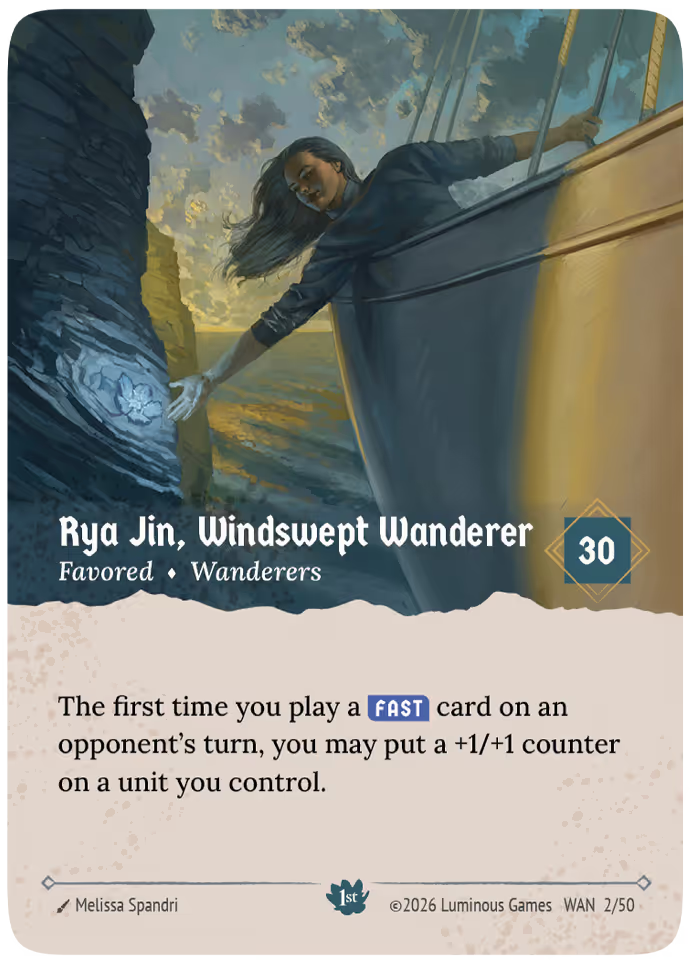
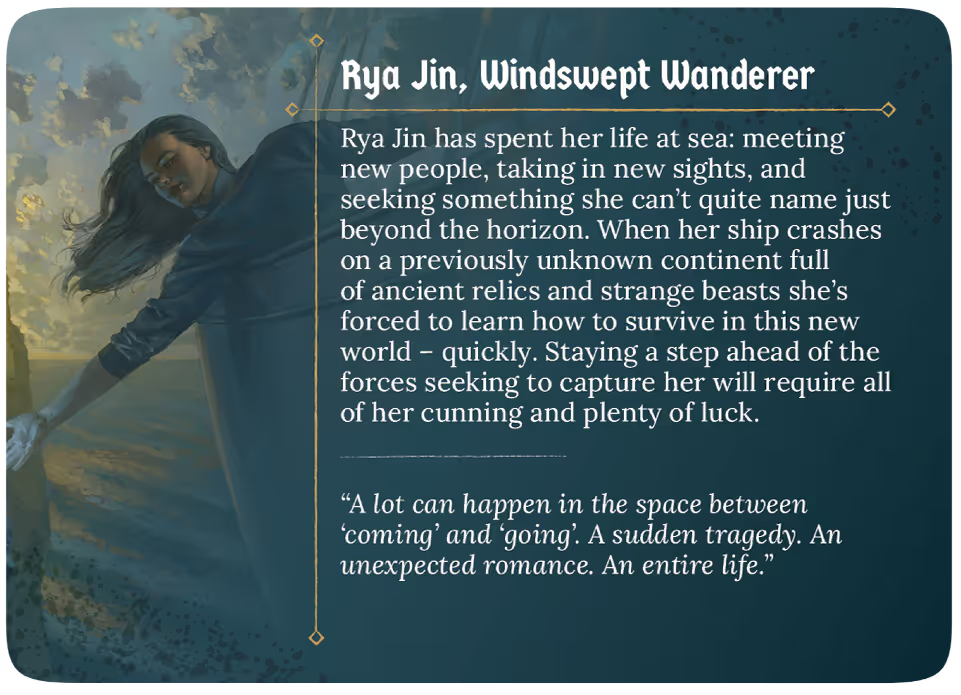
Rya Jin, Windswept Wanderer Decklist
With a Favored ability granting benefits for playing cards during your opponent’s turn, Rya Jin is the perfect pick for players who want to control the tempo and put a wrench in the plans of your enemies.
Favored
1x Rya Jin, Windswept Wanderer
Uniques
1x Velna, Exiled Magebreaker
1x Kamarua’s Gospel
Units
3x Field Recruiter
3x Trail Guide
3x Delcan Operative
3x Diving Dragonspawn
3x Vinehorn Stag
3x Wilderroad Sentry
3x Ashen Owl
3x Rya’s Horizon Guard
3x Jungle Dragon
Spells
3x Hired Research
3x Walk Back
3x Expand the Mind
3x Wander the Stacks
3x Sudden Death
3x Cataclysmic Echo
Relics
3x Vortex Cannister


